

Geo Energy Japan
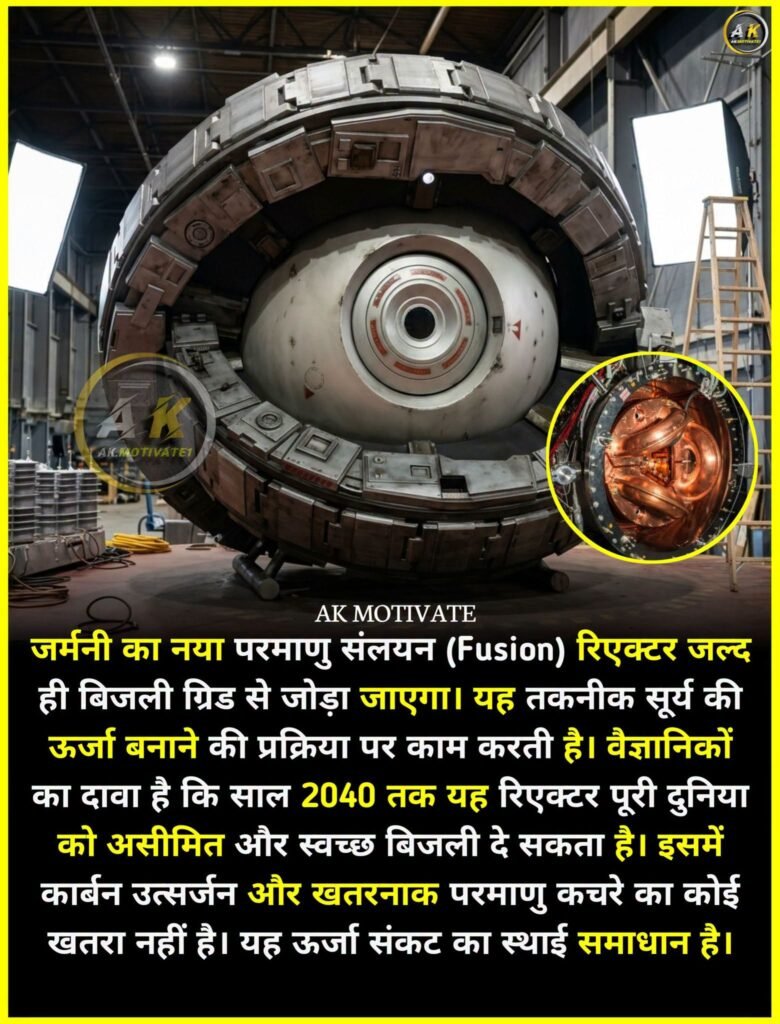
The holy grail of clean energy is no longer science fiction. Germany is officially leading a global race to commercialize nuclear fusion, with ambitious goals to connect next-generation reactors to the electricity grid much sooner than anyone anticipated. Historically, traditional nuclear power plants relied on nuclear fission—the process of splitting heavy atoms, which carries the dangerous risk of catastrophic meltdowns and leaves behind toxic, long-lived radioactive waste. This new technology completely flips the script by harnessing the exact same physical process that powers our Sun: nuclear fusion.
By forcing light hydrogen isotopes to fuse into helium under extreme pressures and temperatures exceeding 100 million degrees Celsius, scientists are literally capturing the power of a star inside a machine. The breakthrough lies in advanced magnetic confinement systems, such as the Wendelstein 7-X stellarator in Greifswald, which recently smashed world records by maintaining stable plasma confinement for over 30 minutes. This proves that continuous, long-duration energy release is scientifically viable.
Through the Federal Ministry of Education and Research’s strategic “Fusion 2040” initiative and a multi-billion euro investment, the German government is accelerating public-private partnerships to build the world’s first operational commercial fusion power plant by the 2040s. The geopolitical and environmental implications of this shift are staggering. Because the primary fuel sources—deuterium and lithium—are abundantly extracted from basic seawater, a single glass of water can generate as much energy as burning hundreds of liters of oil, without relying on weather-dependent renewables.
Most importantly, nuclear fusion poses absolutely zero risk of carbon emissions, cannot trigger a nuclear meltdown, and produces no hazardous, long-term radioactive waste. If Germany succeeds in establishing this continuous, grid-scale electricity ecosystem, it will provide a permanent, sustainable solution to the global energy crisis. By 2040, this technological leap could safely deliver virtually unlimited, clean electricity to the entire world, fundamentally rewriting the future of human civilization. #fblifestyle#nuclear#germany#technology
Sources: Clean Energy Wire, Deutsche Welle (DW), World Nuclear News, Max Planck Institute for Plasma Physics, Nuclear Engineering International (NucNet), Live Science

