

Bamboo Farming
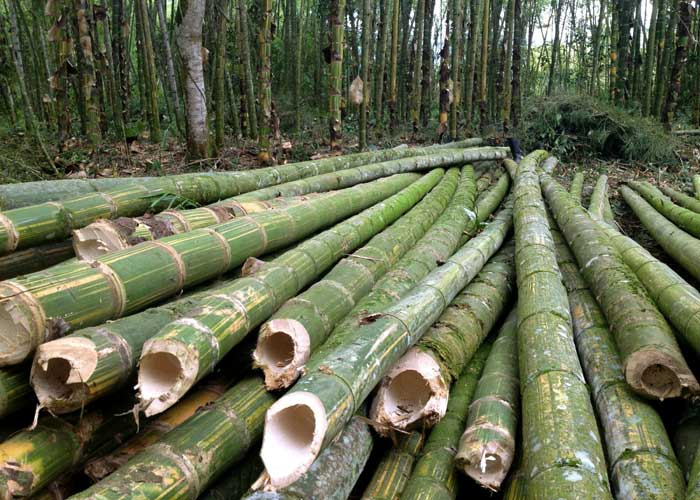
Bamboo farming is the commercial cultivation of bamboo plants for their stems (culms), shoots, and by-products. Bamboo grows faster than most trees and is ready for harvest in 3–5 years, making it a renewable cash crop.
Benefits of Bamboo Farming
- Fast-growing crop: Grows up to 1–1.5 meters/day in some species.
- Low maintenance: Needs minimal irrigation and fertiliser.
- High demand: Used in construction, paper, furniture, agarbatti, and handicrafts.
- Eco-friendly: Releases 30% more oxygen than trees and prevents soil erosion.
- Multiple income streams: Timber, bamboo shoots, handicrafts, biomass.
Suitable Climate and Soil for Bamboo
- Climate: Warm, tropical, and sub-tropical climates (20°C–35°C).
- Rainfall: 1000–3000 mm annually.
- Soil type: Well-drained loamy soil with pH between 5.5–6.5.
- Avoid: Waterlogged, rocky, or saline soil.
Best Bamboo Varieties in India
| Bamboo Variety | Use Case | Growing Time | Avg. Yield/Year |
|---|---|---|---|
| Bambusa balcooa | Construction, Furniture | 4–5 years | 40–60 culms |
| Dendrocalamus strictus | Paper, Agarbatti, Furniture | 3–4 years | 30–50 culms |
| Bambusa vulgaris | Ornamental, Mat weaving | 3–4 years | 25–40 culms |
| Dendrocalamus giganteus | Industrial use, Bioenergy | 5–6 years | 60–80 culms |
💡 Pro Tip: If you want to start a Business but have too many doubts, connect with a Business expert from Boss Wallah for guidance – Check Out
Step-by-Step Bamboo Farming Process
1. Site Selection & Soil Preparation
- Choose a sunny location with good drainage.
- Deep plough the land and remove weeds.
- Add organic manure like cow dung.
2. Planting
- Best time: June–July (monsoon season).
- Spacing: 5×5 meters (400 plants per acre).
- Use saplings or tissue culture plants for uniform growth.
3. Irrigation
- Initial 2 years: Weekly watering.
- After 2 years: Once every 15 days (unless it rains).
4. Fertiliser Management
- Use 2–3 kg of compost per plant/year.
- Apply NPK (10:26:26) once every 3 months in the first year.
5. Pest and Disease Control
- Use neem oil sprays for aphids and mites.
- Mulching helps prevent fungal growth.
Cost of Bamboo Farming Setup (Per Acre)
| Expense Item | Approximate Cost (₹) |
|---|---|
| Land preparation | 10,000 |
| Saplings (400 plants) | 40,000 |
| Fertilizers & manure | 8,000 |
| Irrigation system | 12,000 |
| Labor & miscellaneous | 10,000 |
| Total (1st year) | ₹80,000 |
ALSO READ | Indian organic farming: a vision for a healthy country
Profit Potential & Income Sources
🌟 Income Sources
- Sale of bamboo poles (₹100–₹200 per pole).
- Bamboo shoots (₹50–₹100/kg).
- By-products: Agarbatti sticks, biomass for fuel, handicrafts.
📊 Expected Returns (From 4th Year Onward)
| Revenue Component | Amount (₹) |
|---|---|
| 400 plants × 30 poles × ₹150 | 18,00,000 |
| Shoots + By-products | 2,00,000 |
| Total Revenue (Yearly) | ₹20,00,000 |
| Minus Annual Costs | ₹1,00,000 |
| Net Profit | ₹19,00,000 |
Return on Investment (ROI): Over 20x from Year 4 onward
ALSO READ | The Benefits and Basics of Natural Farming in India
Government Schemes & Subsidies (India)
- National Bamboo Mission (NBM): Up to 50% subsidy on planting and irrigation.
- MIDH Scheme: Grants for bamboo nurseries and processing units.
- PMFME Scheme: Financial support for value-added bamboo products.
🔗 National Bamboo Mission Official Website
Challenges in Bamboo Farming

- Lack of awareness and technical knowledge.
- Market linkage issues.
- Initial investment is high.
- Delayed profits (from the 3rd or 4th year)
