

South Korean researchers have developed advanced materials and processes that can:
What if the most dangerous plastic pollution isn’t floating in the ocean, but flowing silently through your tap?
For years, scientists warned about microplastics. But nanoplastics, even smaller and far more dangerous, remained almost impossible to remove once they entered water systems. Traditional filtration simply could not catch something measured in billionths of a meter.
That may be changing.
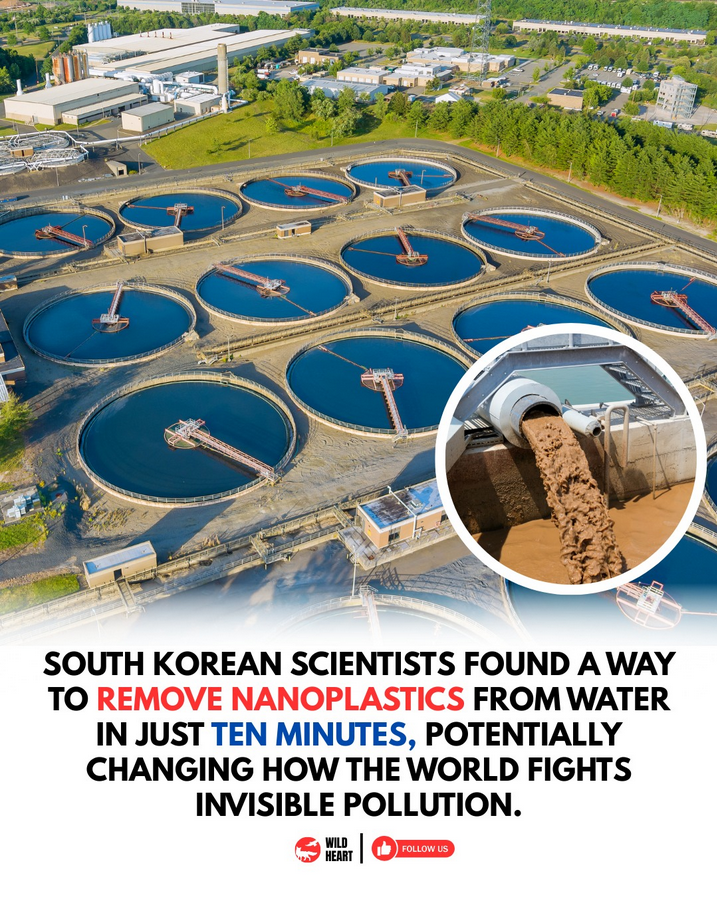
In early 2025, researchers at Pusan National University in South Korea announced a breakthrough method that can remove more than ninety-five percent of microplastics and nanoplastics from water in just ten minutes. Their approach uses ultra-thin, plate-shaped magnetic nanoparticles that bond with plastic fragments and clump them together, allowing the entire mass to be pulled out using magnets.
The idea sounds simple. The impact is not.
Nanoplastics have been found in human blood, lungs, placentas, and even brain tissue. They come from synthetic clothing fibers, food packaging, tires, and industrial waste, silently traveling through rivers, oceans, bottled water, and municipal pipelines. Once inside the body, scientists are still learning what long-term damage they may cause.
The realization is unsettling. Plastic pollution is no longer just an environmental issue. It is a human health issue.
This discovery does not erase the problem overnight. It still needs large-scale testing, cost analysis, and infrastructure integration. But for the first time, removing nanoplastics quickly and efficiently looks technically possible.
And sometimes, possibility is exactly where real change begins.
#fblifestyle#sciencebreakthrough#cleanwater#nanoplastics#futuretech
See less

