

California
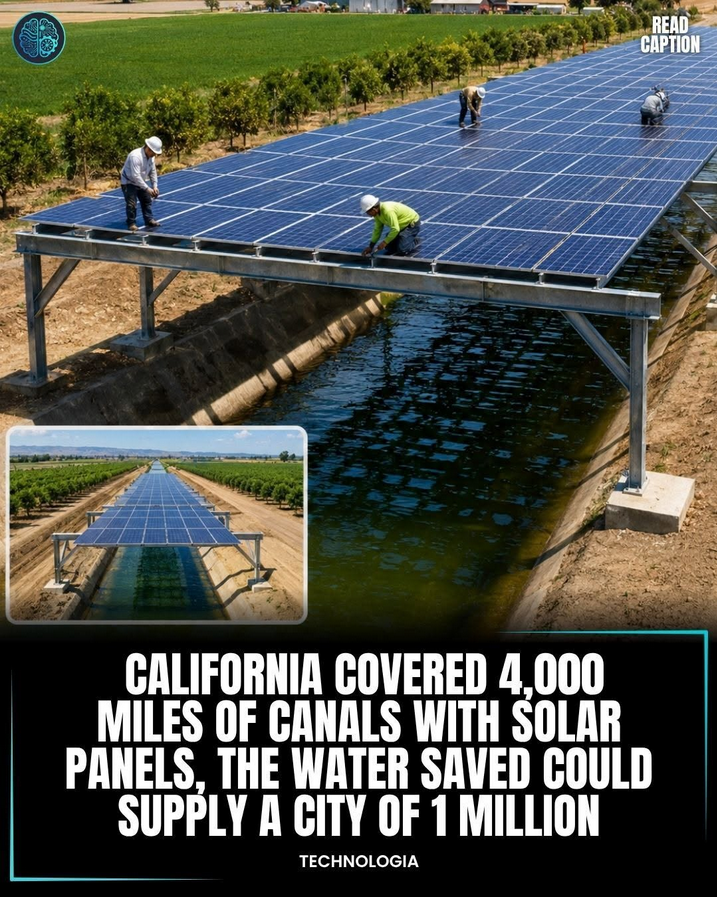
Every water canal ever built has done exactly one job: move water from where it is to where it is needed. Every solar panel ever installed has done exactly one job: convert sunlight into electricity. California just asked why one piece of infrastructure cannot do both. The state is now covering its existing canal network with solar panels, and the early results have exceeded every projection. The panels shade the water below, cutting evaporation losses by up to 90 percent, a reduction so significant that the water saved over a single year could meet the domestic needs of a city of 1 million people. At the same time, the panels generate clean electricity at a scale that makes the entire project economically self-sustaining, with the power sold to the grid covering the cost of installation and maintenance within a fraction of the panels’ operational lifespan. Neither function compromises the other. The water runs cooler beneath the shade, which actually increases the electrical efficiency of the panels above because solar cells perform better at lower temperatures. The panels sit above the water, requiring no new land acquisition, no habitat clearing, and no community opposition over visual impacts because the canals were already there, already ugly, already cutting across farmland and desert in straight lines that nobody ever called scenic.
The numbers driving California’s decision are the kind that infrastructure planners dream about. The state has approximately 4,000 miles of open canals in its water delivery system, mostly in the sun-drenched Central Valley where evaporation rates exceed 5 feet per year. Covering just 25 percent of those canals with solar panels would save enough water to supply 1 million people annually while generating 5 gigawatts of clean electricity, roughly the output of five natural gas power plants. The land saved by using existing canals instead of building new solar farms is tens of thousands of acres of agricultural land that would otherwise be taken out of food production. The cost savings from avoided evaporation, reduced aquatic weed growth, lower maintenance dredging, and reduced energy consumption for water pumping are all secondary to the simple math that the canals were already there, the sun was already shining, and the water was already evaporating. California did not invent a new technology. It finally connected two existing technologies that should have been combined decades ago. The world’s largest solar canal project is now underway, and the only question is why every water district in every sunny, drought-prone region on earth is not already doing the same thing.
#SolarCanals#WaterEnergyNexus#CaliforniaInfrastructure
See less

